War Robots Multiplayer Battles
- 4.3
- Rating
- 100.00M
- Installs
- Free
- Price
 Analysis by App-foxy
I spent time with War Robots Multiplayer Battles as an action game built around piloting heavy machines into competitive fights. Its appeal is easy to understand: instead of controlling a small soldier, I move a full-sized robot across a battlefield, choose when to push, retreat, capture space, or support a teammate, and try to make every weapon cycle count. It feels more deliberate than a typical run-and-gun shooter, but it still delivers the quick decisions and visual impact I expect from a mobile arcade game.
The game is free to start on Android, carries an Everyone 10+ age rating, and comes from MYGAMES MENA FZ LLC. It has been available since August 26, 2015, so this is not a new experiment trying to find an audience. It is an established multiplayer title with an average rating of 4.3 from around 5.1 million ratings and more than 100 million installs. Those figures do not automatically make it a good fit for everyone, but they do explain why the game has a deep, active-feeling ecosystem rather than a short-lived novelty.
How the current version feels to play
The current version is 11.7.1, and my overall impression is that War Robots is designed for players who enjoy gradually improving a collection of machines rather than chasing a single perfect match. Battles are the immediate attraction, but the longer-term loop comes from learning which robot and weapon combination suits a particular situation. One machine may feel useful when holding a position, while another is better for taking an opening and forcing opponents to react.
You May Also Like

 Blood Strike: 2.5 Anniversary
Blood Strike’s Loadouts Turn Every Drop Into a Tactical Gamble
A close look at Blood Strike’s custom loadouts: how fast access to signature weapons reshapes its battle royale rhythm, rewards preparation, and narrows the gap between fights.

 Pandora - Music & Podcasts
Pandora’s Music Is Easy to Start, but Harder to Recover
Pandora’s strength is its low-effort path from a seed to a station. Its weak spot is how much confidence it asks you to place in connection, setup, and quiet recovery.

 8 Ball Pool
 Is Built on Rivalries, Rematches, and Routine
A close look at the rivalries, rematches, shared routines, and unanswered safety questions that turn a quick pool match into a persistent mobile community.

 Samsung Music
’s Quiet Strength Is Playing What You Already Own
Its reach comes less from spectacle than from dependable access to a personal library. That simplicity is both the app’s strongest retention engine and its ceiling.

 AccuWeather: Weather Radar
AccuWeather Review: A Quick, Clear Forecast for Everyday Decisions
For everyday plans, the best forecast is the one you can understand quickly. AccuWeather makes rain timing, radar, and local conditions easy to act on, with a few trade-offs.

 Hill Climb Racing
Why Hill Climb Racing Still Turns Crashes Into One More Run
A tiny car, a bumpy hill and one more upgrade: Hill Climb Racing keeps resurfacing because its simple chaos makes every near-miss feel personal.
More From Our News Desk



That distinction matters because the game is not simply about aiming faster. A strong player has to read the battlefield. I found myself watching lanes, checking where allies were moving, and deciding whether a damaged robot was still worth risking. Charging forward can look heroic, but losing a useful machine at the wrong moment may leave the rest of the team without pressure or protection. The best matches reward patience as much as aggression.
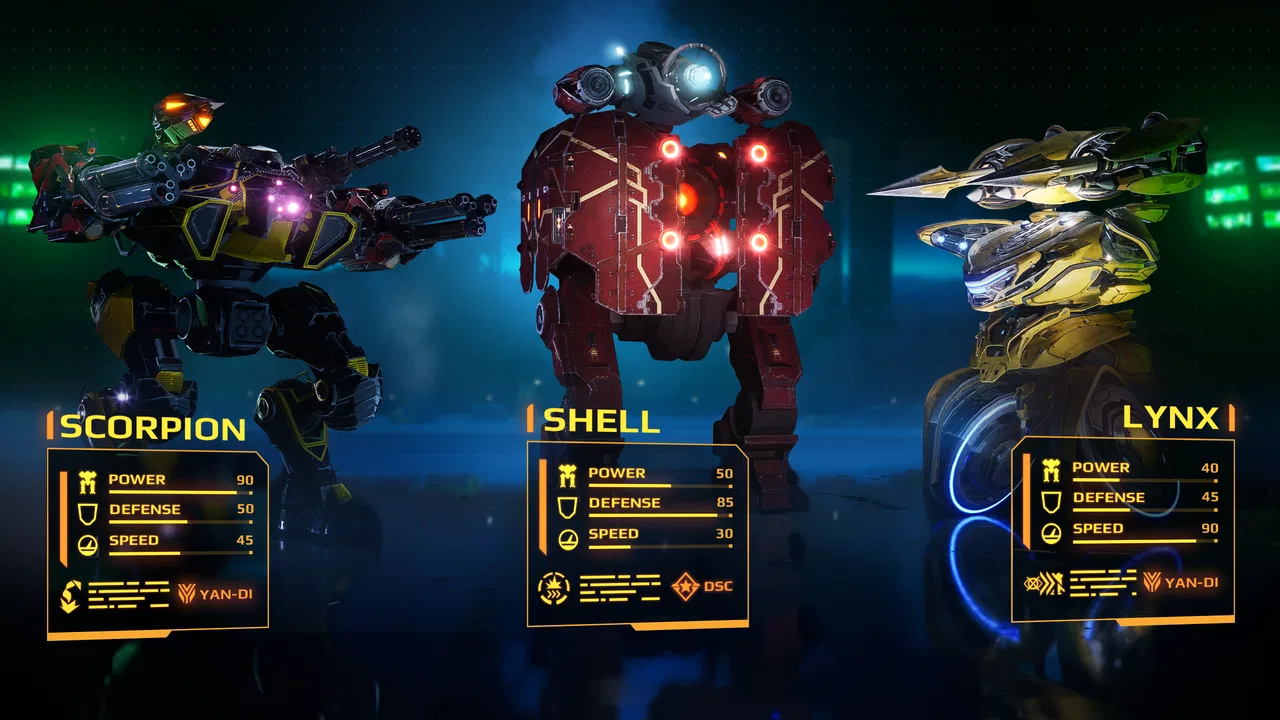
The 3D presentation helps the scale sell itself. Robots feel weightier than ordinary mobile characters, and the action has a satisfying mechanical character even when I am concentrating on objectives. It is still an arcade experience rather than a military simulation, so the controls and match flow are approachable. I could understand the basic rhythm quickly, while the finer decisions took longer to appreciate.
For a short everyday session, I would play a match during a commute, a break, or while waiting for an appointment. The important point is to enter with the right expectation: this is not a relaxing idle game. Even a brief session asks me to pay attention to movement, firing opportunities, cover, and team positioning. If I am too distracted to watch the battlefield, I usually make poor choices and waste the match.
Movement and combat reward restraint
The most useful habit I developed was separating “I can shoot this enemy” from “I should expose myself to shoot this enemy.” A robot may have enough firepower to threaten an opponent, but the exchange can still be unfavorable if several enemies can answer immediately. Waiting behind cover, changing angle, or letting a teammate draw attention often creates a better opening than firing the moment a target appears.
This makes the game more thoughtful than its bright arcade presentation suggests. I also learned to avoid treating every robot as disposable. A damaged machine can still contribute by contesting an area, forcing an enemy to turn, or protecting a more valuable ally. That is one of the less obvious strengths of the design: survival is not only about preserving health; it is about preserving options for the rest of the battle.
New players should spend their early matches learning the shape of the battlefield instead of trying to imitate the most aggressive player on the team. Notice which routes expose a robot from multiple directions, which positions allow a retreat, and where an enemy can appear unexpectedly. This knowledge remains useful even as equipment changes, because positioning is more dependable than chasing every new upgrade.
The collection loop changes the meaning of progress
War Robots is most enjoyable when I treat progression as experimentation. Improving a robot is not just a matter of making a number larger; it is also about understanding what role I want that machine to play. A setup that feels powerful in an open lane may be awkward in a crowded area. Likewise, a robot that seems less impressive at first can become valuable when I use it to support a specific team plan.
That creates a practical trade-off for free players. The game costs nothing to download, but in-app purchases range from $0.29 to $299.99 per item. I would approach the purchase system carefully and decide in advance whether I am comfortable spending. The safest way to enjoy the game is to focus on improving decision-making and learning the equipment already available, rather than assuming every problem can be solved by buying something stronger.
My advice is to resist upgrading everything at once. Concentrating resources on a small group of robots makes it easier to understand what has actually improved. It also prevents the common frustration of having many partially developed options without a dependable choice for a difficult match. When I kept a clear main setup and treated other machines as experiments, the progression felt much easier to manage.
What the long-running design means for players today
The release history gives War Robots a different character from newer action games. A title that has been playable since 2015 has had time to build a substantial amount of equipment, player knowledge, and progression depth. That is good news for people who enjoy a game with room to study, but it can also make the first steps feel less simple than the basic shooting controls suggest.
Version 11.7.1 is the point at which I would judge the game as it exists now, not as a promise of what it might become. The important current evidence is the mature structure: a free-to-play robot shooter with a large audience, a long-running progression path, and enough variety in machine roles to support different approaches. I would not install it expecting a small, self-contained campaign that can be completed and set aside.
Existing players are likely to appreciate that the game still has a reason to return. Familiarity with one robot does not eliminate the need to adapt, because opponents may force different decisions and a comfortable tactic can become predictable. The downside is that long-term games can make returning after a break feel demanding. I would give myself time to relearn the current rhythm instead of judging the first few matches too harshly.
Who will get the most from it
I recommend War Robots to players who like competitive mobile action but want more weight and planning than a straightforward shooter usually provides. It is a strong match for someone who enjoys comparing loadouts, improving through repeated battles, and finding satisfaction in a well-timed retreat or capture rather than only in a high elimination count.
It also suits players who enjoy team-based responsibility. I sometimes had more influence by blocking an approach, drawing attention away from an ally, or holding a useful position than by chasing a weakened enemy. That kind of contribution can be easy to miss if I judge every match only by personal damage, so the game is more rewarding when I pay attention to the wider battle.
I would be more cautious recommending it to someone who wants a purely casual shooter with no long-term commitment. The collection and upgrade side is central to the experience, and the competitive environment can make losses feel more personal than they should. Players who dislike free-to-play progression, especially when optional purchases are visible, may prefer a premium action game with a simpler structure.
It is also not my first choice for someone seeking a story-driven robot adventure. The main attraction here is repeated multiplayer combat and the process of refining a fighting setup. If I wanted a campaign with character development, scripted missions, or a clearly defined ending, I would look elsewhere rather than expecting this game to provide that kind of experience.
Three practical habits that improve the experience
First, I recommend assigning each robot a clear job before entering a match. “General-purpose” sounds flexible, but it often leads to indecision. If I know that one machine is for holding ground and another is for taking an opening, I make faster choices when the battle becomes chaotic. This also makes it easier to tell whether a loss came from poor equipment or from poor timing.
Second, I avoid spending every weapon cycle simply because a target is visible. Firing can reveal my position or leave me unable to answer a more dangerous push. Waiting for an enemy to cross an exposed area, especially when an ally is ready to help, often produces a better result than starting a long exchange from an unfavorable angle.
Third, I use losing matches as map lessons rather than immediately changing my entire collection. If I repeatedly fail in the same lane, I first ask whether I am entering it too early, staying too long, or ignoring an escape route. Changing equipment may help, but understanding the reason for the failure usually improves more than making a random upgrade.
A fourth habit is useful for anyone returning after time away: play conservatively until the controls and battlefield flow feel familiar again. The temptation is to prove that an old favorite setup still works, but the better test is whether I can make sound decisions with it under current pressure. This approach reduces frustration and shows whether the problem is the equipment, the situation, or simply rusty judgment.
Where the game still creates friction
The biggest limitation is the tension between competitive play and free-to-play progression. Because the game offers purchases reaching $299.99 for an item, I would not describe it as a completely even-feeling environment for every player at every stage. A careful free player can still enjoy the battles, but patience becomes part of the cost. Progress may feel less satisfying if I compare my collection directly with players who spend more.
There is also a mental load that grows over time. A beginner can understand movement and shooting quickly, but making good choices across several robots, weapons, and battlefield situations takes attention. The game may feel cluttered to someone who wants a clean, immediately readable competitive experience. I prefer learning it gradually, because trying to understand every option at once makes the progression feel more complicated than it needs to be.
Match quality can depend heavily on team behavior. I can make a sensible plan and still lose ground if allies scatter or ignore an important position. That is normal for multiplayer games, but it is worth knowing before installing: War Robots can reward cooperation without guaranteeing it. I enjoy the moments when a team moves with purpose, yet I also have to accept that some matches will be messy and outside my control.
The age rating of Everyone 10+ makes it accessible to a broad audience, but accessibility should not be confused with simplicity. Younger players may understand the action while still finding the progression and purchase choices difficult to evaluate. I would encourage anyone playing on a shared family device to be clear about spending before beginning, particularly because the available purchase range is wide.
How it compares with other mobile action choices
Compared with a conventional mobile shooter built around quick character movement, War Robots feels slower, heavier, and more positional. I spend more time considering exposure and routes, and less time relying on constant sprinting and rapid target switching. That makes it a better choice for me when I want action with a tactical layer, but a worse choice when I want instant, frantic matches that demand only reflexes.
Compared with a strategy game, it is much more immediate. I am directly controlling the machine rather than managing a distant army, so mistakes happen in real time and can be corrected through movement or timing. The trade-off is that I do not get the same calm planning space that a traditional strategy title offers. War Robots sits between those styles: direct control on the surface, strategic choices underneath.
Compared with a premium game, the free entry is convenient, but the progression model asks for more patience and self-control. A paid alternative may provide a cleaner route through its content, while this game offers a longer competitive loop for players willing to work through it. Neither approach is automatically better; the right choice depends on whether I value immediate completeness or an evolving collection.
What I would watch as an existing player
For the future, I would pay attention to how version updates affect the balance between learning, collecting, and competing. The healthiest direction would be one where a thoughtful player can continue improving through positioning and timing, even when the equipment landscape changes. I would also watch how approachable the game remains for someone joining after years of accumulated content.
That does not mean expecting every update to make the game easier. A competitive title needs depth, and War Robots benefits from having meaningful choices. The important question is whether those choices remain understandable. When I can identify why a robot works, why a tactic failed, and what I should practice next, the complexity feels valuable. When progress becomes difficult to interpret, the same depth can feel like friction.
My current recommendation is therefore specific: try it if the idea of piloting a customizable combat robot in repeated multiplayer battles sounds exciting, and give yourself several sessions to learn the rhythm before deciding. Do not judge it solely by the first chaotic matches, but do not ignore the purchase-driven progression either. The best way to enjoy War Robots is to treat smart positioning and deliberate improvement as the main rewards, not instant access to everything.
For me, the game works because its robots make ordinary shooter decisions feel substantial. A retreat has weight, a successful flank feels earned, and protecting a teammate can matter as much as chasing a target. It is not the right pick for every mobile player, especially anyone seeking a story campaign or a perfectly level free-to-play contest. But if you want a long-running action game with mechanical scale, competitive battles, and room to develop your own style, I think it is worth installing for free and seeing whether that slower, heavier rhythm suits you.
FAQs for War Robots Multiplayer Battles
01What is War Robots Multiplayer Battles?
War Robots Multiplayer Battles is a real-time, tactical multiplayer game where players control giant robots in thrilling 6v6 battles. The game offers a variety of robots and weapons, allowing players to customize their strategies and compete against others worldwide. It's available on both Android and iOS platforms.
02Is War Robots free to play?
Yes, War Robots is free to download and play. However, it offers in-app purchases for various in-game items like premium currency, robot upgrades, and special equipment. While purchases can enhance gameplay, they are not mandatory to enjoy the game.
03What are the system requirements for War Robots?
For Android users, War Robots requires a device running Android 5.0 or higher with at least 2 GB of RAM. For iOS users, the game requires iOS 9.0 or later and is compatible with iPhone, iPad, and iPod touch. A stable internet connection is essential for optimal gameplay.
04Can I play War Robots with friends?
Absolutely! War Robots allows you to team up with friends in multiplayer battles. You can create or join a clan to strategize and compete together. Coordinate with your team using in-game chat to enhance your tactical advantage and boost your chances of victory.
05How often does War Robots receive updates?
The developers of War Robots frequently update the game to introduce new content, features, and improvements. Updates often include new robots, weapons, maps, and events, ensuring that the gameplay remains fresh and engaging. It's recommended to keep the game updated to enjoy the latest features.
Pros
- Real-time multiplayer action is thrilling.
- Diverse robot customization options available.
- Frequent updates with new content.
- Strategic gameplay with team coordination.
- Stunning graphics enhance the experience.
Cons
- In-app purchases can be expensive.
- Matchmaking sometimes feels unbalanced.
- Requires a stable internet connection.
- Battery drains quickly during gameplay.
- Learning curve can be steep for newcomers.

War Robots Multiplayer Battles
Gallery